
Society is determined by its social support. Real help given to weak communities brings them up confidently. The process of development is equal when the state invests in its poor and disabled citizens. This support has received a new value in Punjab.
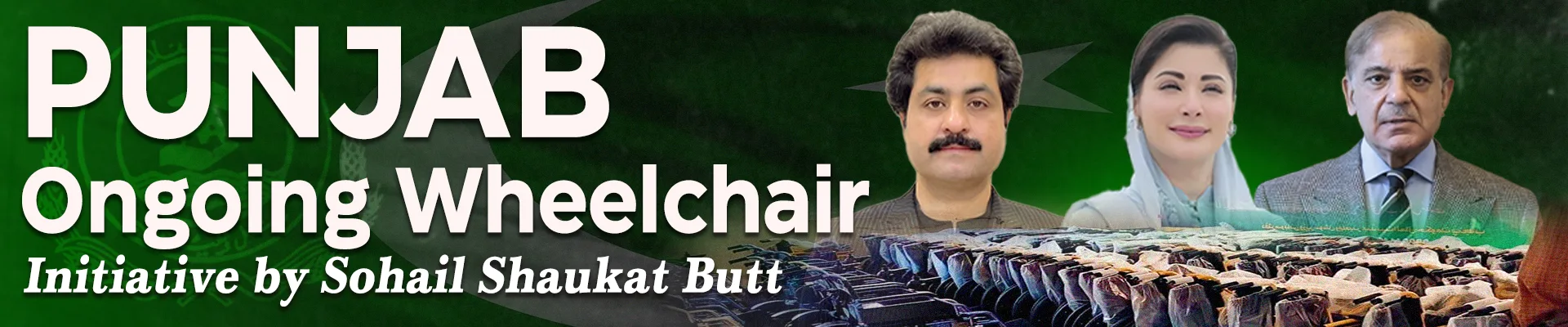
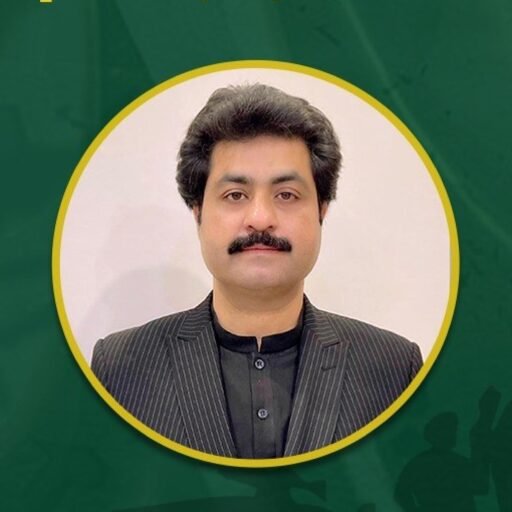
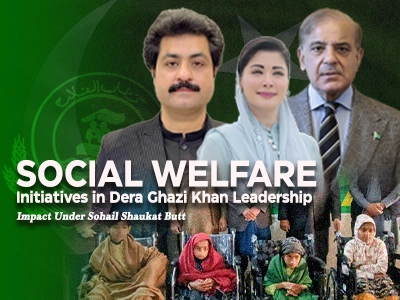
The Wheelchair Distribution Program in Punjab has become one of the most used welfare measures. The then Minister of Social Welfare and Punjab Bait-ul-Maal, Sohail Shaukat Butt, initiated this. He has improved the lives of several families through his work. It has also demonstrated a good model of responsible public service.
The program provides wheelchairs to the poor and disabled individuals who are unable to afford them. It provides freedom, respect, and self-sufficiency. It also causes mental comfort, given that movement is a basic human requirement.
The Social Welfare Department shows its action, not just words, through this work. The effect persists in most of the cities in Punjab. This blog discusses the program and its importance. It also shows how Sohail Shaukat Butt is making a significant impact in welfare programs.
Knowledge of the Purpose of the Social Welfare Department
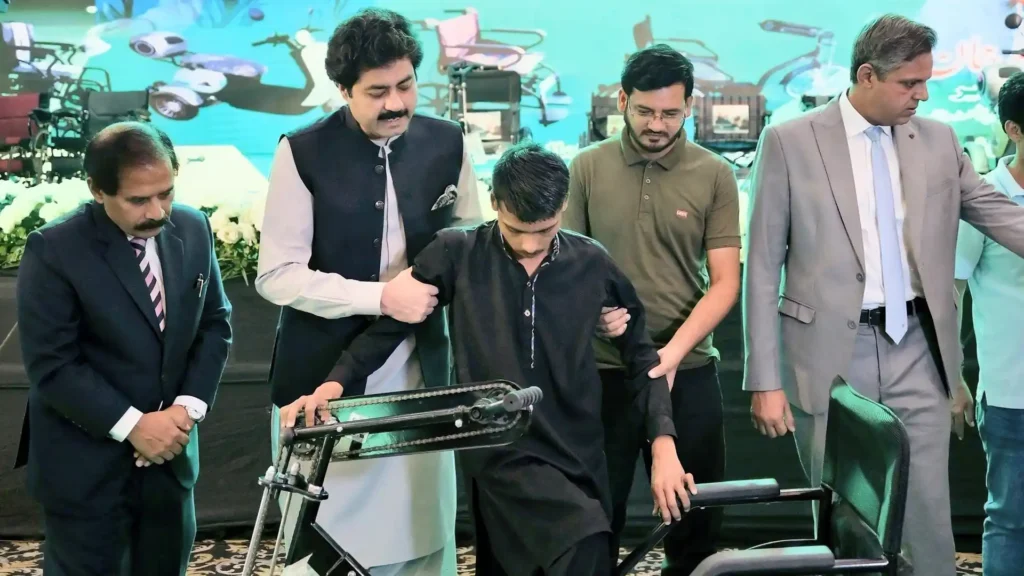
Individuals in every society require attention. Others have a hard time with physical disability. Some fight poverty every day. Some cannot move on their own.
The Social Welfare Department represents these groups. It has direct assistance via numerous welfare schemes. The goal is simple. Nobody can feel lonely in pain and poverty, and disability.
Punjab Bait-ul-Maal plays another significant role. It provides both financial assistance, physical assistance and social protection. The institution aids families that have minimal earnings. It gets to individuals in urban areas and distant villages.
The department, along with Bait-ul-Maa, makes a powerful group of welfare services. These services are mobility support, healthcare support, protection of the disabled, and special assistance for the weaker societies.
Therefore, the Wheelchair Distribution Program Punjab was a logical continuation of their activity. It is a compassion-based program. It acknowledges the pain that disabled individuals experience when they cannot move with ease daily. It also understands that mobility is the key to education, labour, and decency.
Sohail Shaukat Butt: An Active Vision Public Servant
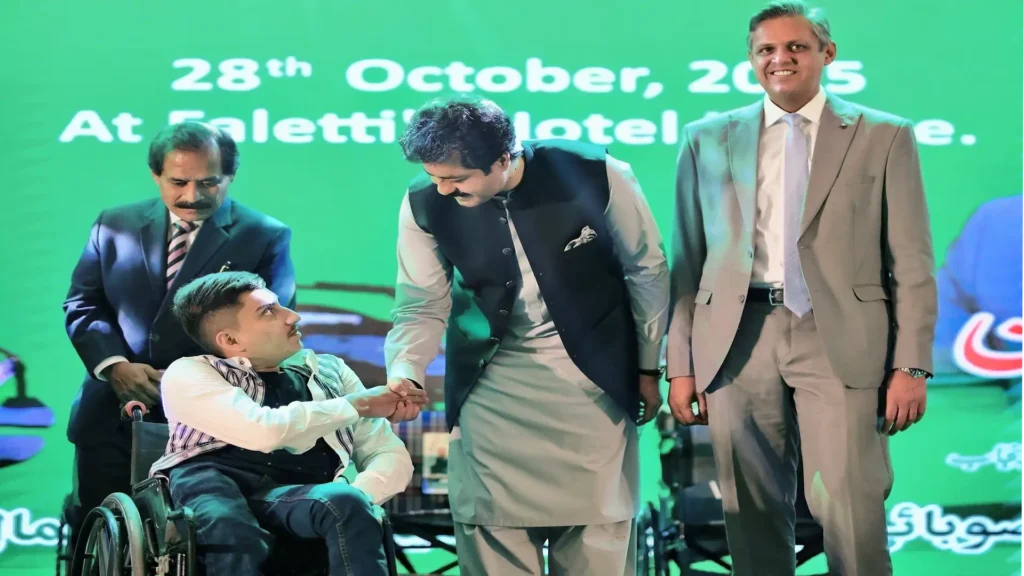
Real leaders do not remain in offices. It emerges and touches individuals where they need assistance. Sohail Shaukat Butt has demonstrated this by deeds.
His visits to districts, hospitals, and welfare centres show this approach. He listens to people. He observes their problems first-hand. Then he designs assistance which suits actual requirements.
His work avoids long delays. It focuses on timely action. Being a minister, he focuses on welfare programs in poor families. He also makes sure that these programs are available to the most needy groups.
Many initiatives became strong under his guidance. One of the best ones is the Wheelchair Distribution Program in Punjab. It emphasizes his attention to mobility support, disability care and involvement.
People across most cities commend the good changes. They meet a minister who walks towards the community instead of waiting for complaints. This has led to trust between local teams, officers and the people. This has led to the fact that welfare programs proceed with a consistent movement.
Introduction of a Wheelchair Distribution Program in Punjab
The notion started with a mere observation. The disabled in Punjab had many individuals who could not move independently. Others crawled on in pain.
Others were extremely reliant on relatives. Some remained locked up in their houses. Mobility, being a determinant of everyday life, rendered its absence a sad and stressful event.
Thus, Sohail Shaukat Butt started the Wheelchair Distribution Program in Punjab. The purpose was clear. The government should provide mobility support free of charge to all disabled and poor individuals. They would provide free wheelchairs to the disabled.
The aim was not only movement. Decency, comfort, and self-sufficiency showed the situation.
A wheelchair assists the disabled to get to school, places of work, places of worship, and health centres. It removes the emotional weight on families. It rebuilds confidence.
When they implemented the plan, they extended the program to districts. Teams of needy persons identified care. Someone checked the forms.
The team verified the medical conditions. They gave preferential treatment to poor families. By this approach, the distribution remained equal, open and systematic.
The Distribution Process
The process is simple. It maintains attention to needy people. Welfare officers identify the disabled first with the help of local records.
Families are also welcome to apply to them. Then they confirm income and disability. Then, someone forwards the names to the district Bait-ul-Maal offices.
Upon approval, local events or direct company delivery will provide the delivery of wheelchairs. The officers will make sure the right people receive the wheelchairs.
This open system develops trust. It also prevents misuse. A clean, equitable, and well-managed welfare project remains.
The program also utilizes the related welfare tools. Some receive medical guidance.
Others receive assistance with daily needs. In some cases, they refer the cases to long-term assistance. This will make the program more valuable.
Effect on Individuals and Society
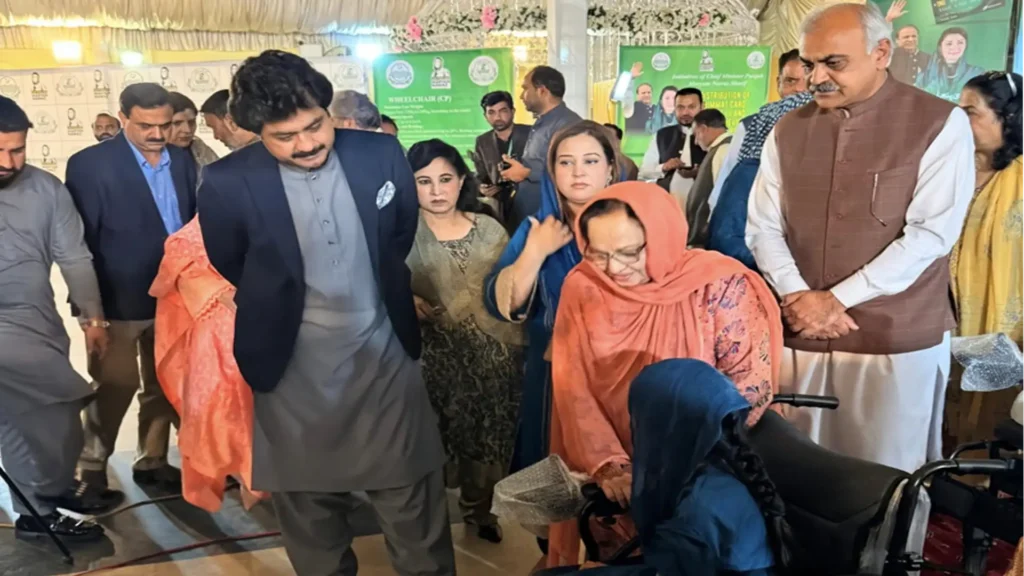
The impact is visible. A wheelchair appears to be an easy tool. Yet it changes life. It gives freedom. It gives painless movement.
It enables individuals to breathe easily. People feel respected again. They are free to move without relying on others.
Families also feel relief. They do not have to carry the crippled member to each step or support.
The disabled children can attend school with ease. Adults can go to workplaces or markets. Old people find comfort in day-to-day mobility.
Groups also benefit. Once disabled individuals become mobile, they re-emerge in social areas again.
They feel re-enthused and regain their membership. This enhances integration and equality. The Wheelchair Distribution Program in Punjab has made this apparent change in most regions.
The reason this program is different
Numerous welfare programs exist, but only a small number of them have people directly targeting them. The Wheelchair Distribution Program in Punjab is unique based on many reasons:
- Of immediate bodily advantage.
- It reaches out to the most vulnerable groups.
- It minimizes dependence in the long term.
- It enhances the quality of life in a few minutes.
- It permeates the cities, even the smallest ones.
- It guarantees process transparency.
- It has an emotive meaning for families.
Above all, the leadership that is interested in social improvement directs it. The program is a priority of Sohail Shaukat Butt. He actively participates in it, making the work dynamic and consistent. His visits ensure accountability at the local levels.
Teamwork Behind the Program
It requires teamwork in a program of this size. The Social Welfare Department works closely with district officers. In distribution events, organizers use volunteers.
Medical experts verify disability cases. On the ground, representatives help poor families through outreach. This community work makes the program hustle-free.
Teamwork also promotes trust. Whenever individuals observe various units collaborating, they become safe.
They hope that one day they will have their time. They trust the process. They also spread information to those in need, and this increases access to the program.
Narratives That Indicate Real Change
In Punjab, there are numerous tales of effects. A man who was not able to walk several years ago is now old and walks freely. A student with disability is now able to get to school without having to worry. Now, a mother who is barely able to move visits the clinic and does not wait to be accompanied by someone carrying her. Such tales are repeated everywhere.
It is not only the physical change. It is emotional. People feel seen. They feel valued. They feel human again. These emotions enhance mental well-being. They also enhance bonds in the communities.
Future Plans for Minister Sohail Shaukat Butt
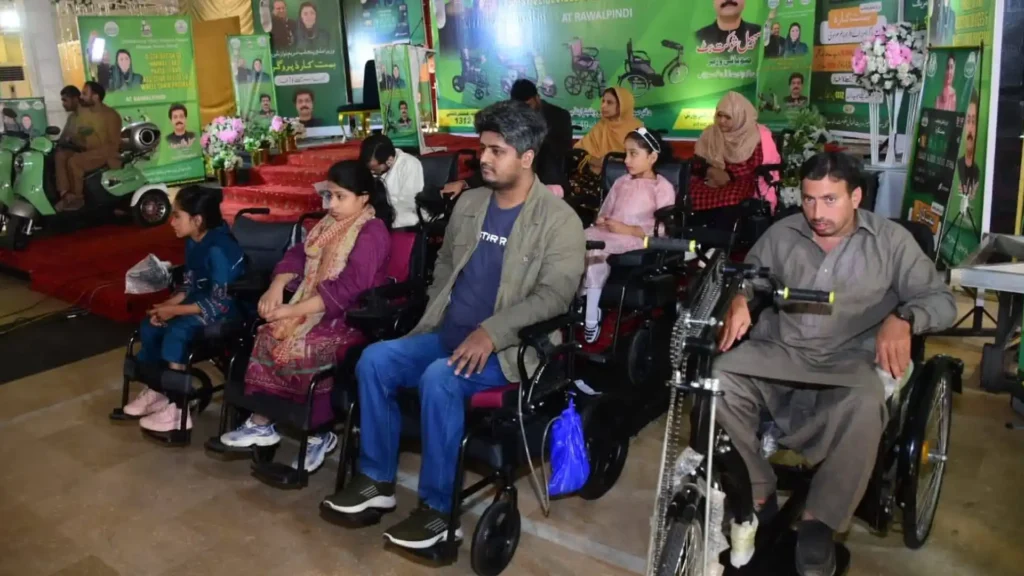
The work does not stop here. Plans are expanding. There will be increased access to wheelchairs in more districts. Additional assistive devices can be introduced in the near future. There are also programs that are being considered that deal with the visually impaired people. The visits to the districts by welfare teams will be more extensive.
This is aimed at long-term support and not a single action. The minister is a person who believes in service. His future move is an indication of devotion to disability care and poverty reduction. This strategy will result in further welfare enhancement in Punjab.
Conclusion
The Wheelchair Distribution Program in Punjab is a example of an apparent reality. Real welfare is action. Communities are strengthened when the right people are placed in the right position at the right time. The Social Welfare Department and Punjab Bait-ul-Maal have been able to demonstrate how this can be achieved under the leadership of Sohail Shaukat Butt. The program introduces mobility, dignity, freedom and hope. It values the problems of the poor and the disabled citizens. It supports families. It empowers the communities in Punjab.
This is not just another welfare program. It is a path toward equality. It is an indication of responsible leadership. It is a step towards a province in which no invalid will feel neglected, and no poor family can be left alone.